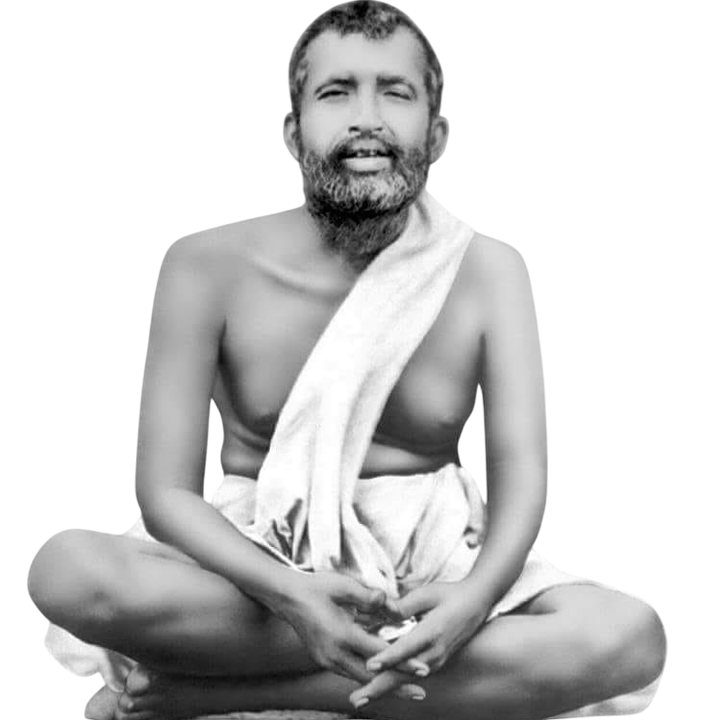
Sri Ramakrishna was born on 18 February 1836 in Kamarpukur, a peaceful village near Kolkata, to the pious couple Sri Kshudiram Chattopadhyaya and Smt. Chandramani Devi. Loved by all, young Gadadhar (his childhood name) showed little interest in formal studies or worldly life. Instead, he enjoyed worship, music, painting, and serving holy men. Even in childhood, he often entered deep spiritual trances — the first at the age of six while watching white cranes fly against dark clouds. His father’s death further intensified his spiritual inclination and detachment from worldly matters.
At sixteen, he came to Kolkata with his elder brother Ramkumar. When the Kali Temple at Dakshineswar, built by Rani Rasmani, was established in 1855, Sri Ramakrishna became its priest. His devotion to Mother Kali was so intense that rituals faded before his longing for the Divine. His prayers culminated in the supernatural vision of the Mother — a turning point that opened the door to a life of God-realization.
Guided by several remarkable teachers, Sri Ramakrishna undertook rigorous spiritual disciplines — Tantra, Vaishnavism, and Advaita Vedanta — attaining realization in each path. Bhairavi Brahmani, a woman ascetic, recognized his spiritual greatness and helped him master the disciplines described in scriptures. Later, with Swami Totapuri, he attained Nirvikalpa Samadhi — the highest non-dual spiritual experience — remaining absorbed in God for months beyond body-consciousness. Through his practices, he rediscovered and reaffirmed the essence of India’s millennia-old spiritual traditions.
To stabilize him in worldly life, his family arranged his marriage with young Saradamani of Jayrambati. When she joined him at Dakshineswar in 1872, Sri Ramakrishna revered her as the living Divine Mother and worshipped her during the sacred Shodashi Puja. Their relationship remained spiritually pure — a shining example of sanctity, respect, and divinity in family life.
Sri Ramakrishna never wrote a book or delivered formal lectures. Yet, his simple parables, profound wisdom, and universal message of harmony attracted seekers, scholars, and intellectuals alike. His words were meticulously recorded by Mahendranath Gupta (M.), later published as Sri Sri Ramakrishna Kathamrita — translated into English as The Gospel of Sri Ramakrishna — an immortal guide for spiritual aspirants worldwide.
In 1885, his throat cancer worsened, and he was moved to a garden house in Cossipore. Surrounded and cared for by his young disciples, he inspired them to dedicate their lives to humanity. This brotherhood later blossomed into the Ramakrishna Math and Ramakrishna Mission, led by his foremost disciple Swami Vivekananda.
On 16 August 1886, chanting the name of the Divine Mother, Sri Ramakrishna left his physical form — merging into Eternal Bliss.
His Eternal Message
As many faiths, so many paths.
Sri Ramakrishna taught that love for God and service to humanity form the essence of every religion. His life is a shining beacon of purity, harmony, and self-realization for the entire world.
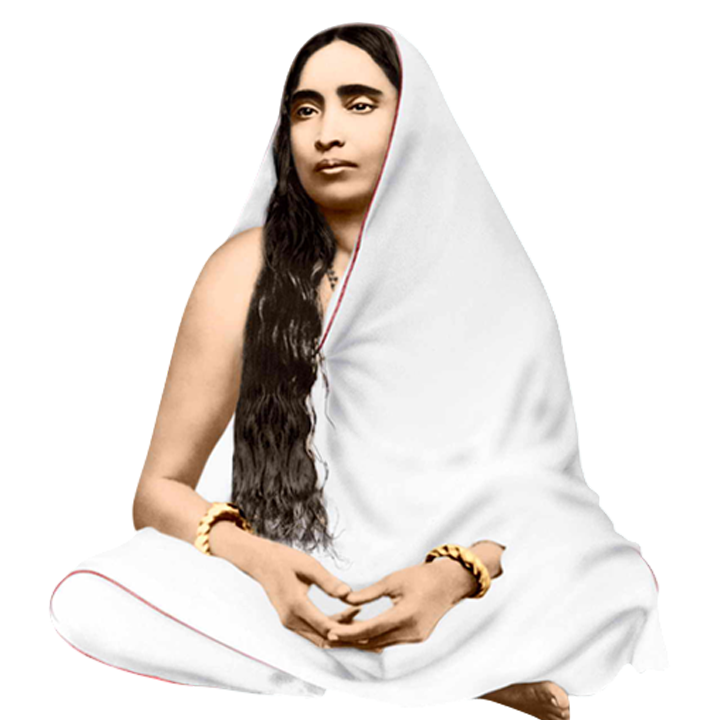
Holy Mother Sri Sarada Devi, the divine consort of Sri Ramakrishna, was born on 22 December 1853 in Jayrambati, a serene village near Kamarpukur in West Bengal, to the devout Brahmin couple Sri Ramachandra Mukhopadhyay and Smt. Shyama Sundari Devi. Though she had no formal education, little Sarada was intelligent, gentle, and deeply spiritual from childhood, helping her mother in household duties with love and dedication.
Married to Sri Ramakrishna at the tender age of six, she continued to stay in Jayrambati until, at eighteen, she undertook a long journey by foot to Dakshineswar. Sri Ramakrishna welcomed her with great affection and guided her to live a deeply spiritual life while fulfilling all duties with purity and devotion. Their sacred relationship remained perfectly pure — a shining example of divine companionship.
Sri Ramakrishna regarded her as the manifestation of the Divine Mother Herself. In 1872, during the sacred Phalaharini Kali Puja, he worshipped her as Shodashi, awakening within her the limitless love and compassion of universal motherhood. She accepted all devotees as her own children and continued to serve them selflessly, even amidst personal discomfort and simple living conditions.
After Sri Ramakrishna’s Mahasamadhi in 1886, the Holy Mother became the spiritual refuge for countless seekers. Her unconditional love embraced all — irrespective of caste, creed, gender, nationality, or past mistakes. She provided strength and guidance to the disciples in shaping Ramakrishna Math and Ramakrishna Mission. She encouraged women’s education and supported Sister Nivedita’s work for the uplift of girls in India.
Despite being revered as the Divine Mother, Sarada Devi lived like a humble village woman — cooking, serving, and performing daily chores with serenity. Even amidst hardships and illness, she radiated peace, patience and compassion that transformed lives around her. Sister Nivedita beautifully described her life as
"one long stillness of prayer."
She saw every living being as her child and showered motherly affection upon all. Speaking of her divine mission, she once said:
"The Master had motherly love for everyone. He has left me behind to reveal that Motherhood to the world."
Physical strain and illness gradually weakened her, and on 21 July 1920, Holy Mother withdrew from her mortal form — leaving behind an eternal legacy of purity, compassion and spiritual strength that continues to guide the world.
Her profound words — simple yet transformative — continue to inspire spiritual seekers:
Eternal Source of Strength
Sri Sarada Devi is the ideal woman of modern times — a living embodiment of purity, patience, love and divine wisdom. She remains the everlasting inspiration for the empowerment, education and uplift of women across the world.
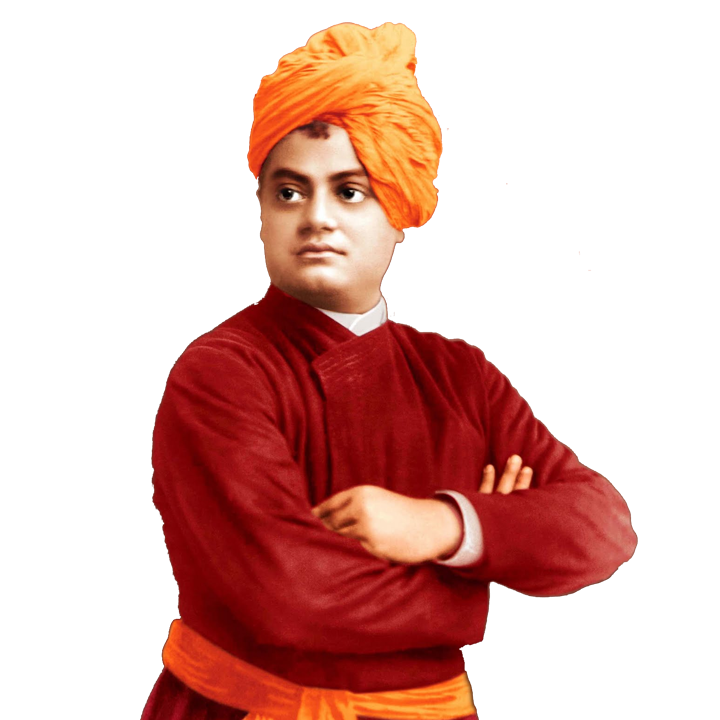
Swami Vivekananda, born Narendranath Datta on 12 January 1863 in Kolkata, belonged to an educated and cultured Bengali family. His father, Vishwanath Datta, was a respected attorney, and his mother, Bhuvaneshwari Devi, was known for her spiritual strength and compassion. Gifted with a sharp intellect and a yogic temperament, young Naren excelled in studies, music and physical fitness. He graduated from Calcutta University, developing deep knowledge in philosophy, religion, history, and Western thought. His early spiritual search brought him close to the Brahmo movement.
In 1881, his life took a divine turn when he met Sri Ramakrishna at the Dakshineswar Kali Temple. Although initially skeptical of the saint’s God-intoxicated state, Naren’s analytical mind gradually surrendered to Sri Ramakrishna’s unconditional love and profound spiritual realization. Recognizing his immense inner potential, Sri Ramakrishna trained him to be a world-teacher — the torchbearer of India’s ancient spiritual heritage.
After Sri Ramakrishna’s Mahasamadhi in 1886, Vivekananda assumed the leadership of his brother disciples and established a new monastic order. In 1887, they took formal vows of Sannyasa, and Naren became Swami Vivekananda — dedicated to realizing God and serving humanity.
In 1893, Swami Vivekananda represented Hinduism at the World’s Parliament of Religions in Chicago. His opening words —
“Sisters and Brothers of America”
— won the hearts of all present. He proclaimed the universal message of Vedanta: harmony of all religions, oneness of humanity, and divinity within every soul. His dynamic spiritual presence and fearless message changed how the world viewed India and its culture.
He later founded Vedanta Societies in the US and UK, inspiring seekers including Sister Nivedita (Margaret Noble), who dedicated her life to India under his guidance.
Back in India, Swamiji urged people to build a strong, self-reliant nation based on spirituality, education and service to the poor. He established the Ramakrishna Math and Ramakrishna Mission, blending contemplation with compassionate action — “Atmano mokshartham jagat hitaya cha” (For one’s own liberation and the welfare of the world).
Swami Vivekananda worked tirelessly until his passing on 4 July 1902, at just 39 years of age. In a short span, he awakened a spiritual revolution that continues to shape India and the world. He is celebrated as the patron saint of modern India, and a timeless icon of youth, courage and universal brotherhood.
His Immortal Message
Arise, awake and stop not till the goal is reached.
Swami Vivekananda continues to inspire the world to live a life of strength, knowledge, service and divine realization.